







Snoring is a common problem that affects millions of people around the world. Whether you snore yourself or share a bed with someone who does, it can take a toll on your sleep quality and even your health. But why do we actually snore? In this article we dig into the causes of snoring, what it does to you, and what you can do to prevent it.
What is snoring?
Snoring is the sound you make when the airflow through your nose and throat is partly blocked while you breathe. That makes the soft tissues in your throat vibrate, which creates the typical snoring sound.
Why do we snore?
-
Blocked airways
One of the most common causes of snoring is a partly blocked airway. That can come from things like a stuffy nose from a cold or allergies, a deviated septum, or swollen tonsils and adenoids. When your airways are narrower, the air has to push harder through the openings, which leads to vibrations and snoring. -
Relaxed muscles during sleep
While you sleep, the muscles in your body relax, including the muscles in your mouth, throat and tongue. In some people these muscles relax so much that they partly block the airway. This happens especially in the deeper stages of sleep and during REM sleep, when your muscles are at their most relaxed. -
Excess weight
Excess weight can contribute to snoring because extra fatty tissue around the neck and throat narrows the airways. That makes blockages more likely and makes it harder to breathe freely while you sleep, which leads to snoring. -
Age
As we get older, the muscles in our throat lose tone and elasticity. That can make the airways get blocked more easily during sleep, which raises the risk of snoring. -
Alcohol and medication
Alcohol and certain medications, such as sleeping pills and sedatives, relax the muscles in your throat even more than usual. That can block your airways during sleep and cause snoring or make it worse. -
Sleeping position
People who sleep on their back are more likely to snore, because the tongue and the soft palate can sink back and block the airway. Sleeping on your side can help prevent that. -
Your anatomy
Some anatomical features can make you more prone to snoring. A long uvula, a thick or soft palate and a narrow throat can all play a part. People with a deviated septum or nasal polyps are also at higher risk.
The effects of snoring
Snoring on its own is usually harmless, but it can be a sign of an underlying health problem such as obstructive sleep apnea (OSA), a serious sleep disorder in which your breathing briefly stops during sleep. Snoring can also lead to:
- Poor sleep quality: snoring can disturb the sleep of both the snorer and their partner, leading to tiredness, irritability and trouble concentrating during the day.
- A higher risk of health problems: chronic snoring, especially together with sleep apnea, is linked to a higher risk of high blood pressure, heart disease and stroke.
- Relationship problems: snoring can cause tension in a relationship, especially when it keeps disturbing your partner's sleep.
What can you do about snoring?
Luckily there are several ways to reduce or prevent snoring. Here are some effective ones:
-
Losing weight
If excess weight plays a part in your snoring, losing weight can help open your airways and reduce snoring. -
Changing your sleeping position
Try sleeping on your side instead of your back. That can keep your tongue and soft palate from sinking back and blocking your airway. -
Avoiding alcohol and sleeping pills
Drinking less alcohol and avoiding sleeping pills can help keep the muscles in your throat from going too slack, which reduces snoring. -
Treating allergies and a stuffy nose
If allergies or a stuffy nose play a part in your snoring, a humidifier, allergy medication or, for a short time, a nasal spray can help open your airways. -
Anti-snoring mouthguards
There are several mouthguards that hold your jaw and tongue in a position that keeps your airway open while you sleep. -
Medical treatment
If you think you might have obstructive sleep apnea, or if your snoring is severe, see a doctor. Treatments such as continuous positive airway pressure (CPAP) or surgery may be needed to open the airway and stop the snoring.
Why mouth tape can help against snoring
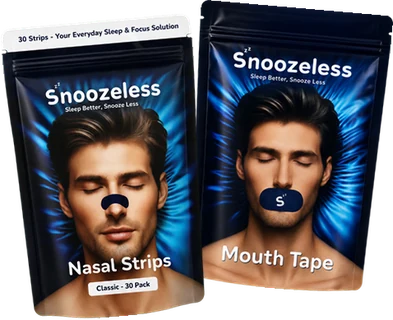
Mouth tape is a simple and effective way to snore less. It keeps your mouth closed while you sleep, so you breathe through your nose. Nasal breathing helps keep your airways open and prevents the vibrations in your throat that cause snoring.
Benefits of mouth tape:
- Encourages nasal breathing: keeps mouth breathing from narrowing your airway.
- Steadies the airflow: gives you an even airflow, which reduces snoring.
- Builds better breathing habits: regular use helps make nasal breathing your habit, which can reduce snoring in the long run.

Conclusion
Snoring is a common problem with many possible causes, from simple blockages in the airway to more serious underlying conditions such as sleep apnea. In many cases snoring is harmless, but it can be a sign that your body needs help keeping your airways clear. Once you understand what causes your snoring and take the right steps to reduce it, you can improve not only your own sleep but your partner's as well.


