







What is mouth breathing?
Let's start at the beginning: mouth breathing simply means breathing through your mouth instead of your nose. It's normal to breathe through your mouth now and then, especially during exercise or when you have a cold. But chronic mouth breathing, especially while you sleep, can have serious consequences for your health and your sleep quality.
How does mouth breathing affect your sleep?
While you sleep, nasal breathing is essential. Your nose is built to filter, humidify and warm the air before it reaches your lungs. When you breathe through your mouth, you skip all of that, which can lead to:
- A dry mouth and throat: not only uncomfortable, but also a higher risk of bad breath and dental problems.
- Sleep apnea: mouth breathing is often a symptom of, or a risk factor for, sleep apnea, a sleep disorder in which your breathing repeatedly stops and starts while you sleep. The result is a disrupted sleep cycle.
- Snoring: people who breathe through their mouth are more likely to snore, which can affect their own sleep and their partner's.
- Lower oxygen levels: breathing through your mouth may mean you take in less oxygen, which can raise your heart rate and blood pressure and disturb your sleep even more.
What causes mouth breathing?
Mouth breathing can have several causes. Some of the most common ones:
- A blocked nose: this can come from allergies, a cold or anatomical issues such as a deviated septum.
- Habit: some people breathe through their mouth without realizing it, even when nothing is blocking their nose.
- Sleep apnea: as mentioned above, sleep apnea can cause mouth breathing, and the other way around, mouth breathing can also contribute to sleep apnea.
Long-term effects of mouth breathing
When mouth breathing becomes a chronic habit, it can lead to serious health problems. Besides poorer sleep, other complications can show up over time:
- Dental problems: as your mouth gets drier, your teeth lose some of their natural protection, which can lead to cavities and gum problems.
- A higher risk of infections: your nose works as a filter that keeps bacteria and other particles out of your body. Mouth breathing lets these germs in more easily.
- Poor tongue and jaw posture: this can affect how the jaw develops and even lead to orthodontic problems, especially in children who often breathe through their mouth.
What can you do about mouth breathing?
The good news: there are ways to tackle mouth breathing and improve your sleep. Here are a few effective steps you can take:
- See your doctor or an ENT specialist: if you deal with chronic nasal congestion, you may need medical treatment. That can range from nasal sprays to surgery in more serious cases.
- Use a humidifier: dry air can contribute to a stuffy nose, so a humidifier can help keep the humidity in your bedroom at a good level.
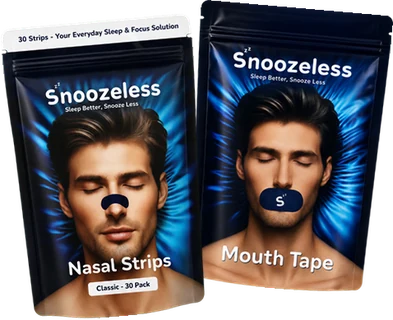
- Try nasal strips: nasal strips can keep your nose open while you sleep, so air flows through your nose more easily.
- Practice nasal breathing: there are all kinds of breathing techniques and exercises that can help you breathe better through your nose.
Using mouth tape for better sleep
One practical solution that's getting more and more attention is mouth tape. By gently taping your mouth closed at night with a special tape, you train yourself to breathe through your nose. That can help prevent snoring and improve your breathing.

Mouth breathing can hurt your sleep quality, and relearning to breathe through your nose, with help from tools like mouth tape, can make a difference if you snore. Do you have, or suspect, sleep apnea? Then talk to your doctor first, before you try mouth tape.
Summary
Mouth breathing can have serious consequences for your sleep quality and overall health. It's linked to problems like sleep apnea, snoring, a dry mouth and even long-term health complications. Luckily, there are plenty of solutions, such as improving your nasal breathing, and in many cases mouth tape can be an effective way to tackle these problems.
Want to learn more about other ways to sleep better? Take a look around our website for more useful tips and information.
In short, it pays to notice how you breathe while you sleep. Small changes, like improving your breathing technique or using tools like mouth tape, can make a big difference in how rested you feel every morning.


