








Sleep apnea is a common but often unrecognized sleep disorder in which your breathing repeatedly stops and starts again while you sleep. These pauses can last from a few seconds up to a minute and happen several times a night. Sleep apnea can lead to poor sleep quality and a range of health problems. In this article we explain what sleep apnea is exactly, what the symptoms and causes are, and how it's treated.
What is sleep apnea?
Sleep apnea literally means "no breathing during sleep." There are three main types of sleep apnea:
- Obstructive sleep apnea (OSA): the most common type, in which the airway gets partly or fully blocked because the throat muscles go slack.
- Central sleep apnea (CSA): here the brainstem is involved, because it doesn't send the right signals to the muscles that control your breathing.
- Complex sleep apnea: a combination of obstructive and central sleep apnea.
Symptoms of sleep apnea
Sleep apnea is often hard to notice yourself, because it mainly happens while you're asleep. Common symptoms are:
- Loud snoring (especially with OSA)
- Repeated pauses in breathing during sleep (often noticed by a partner)
- Waking up with a dry mouth or sore throat
- Morning headaches
- Excessive sleepiness during the day
- Trouble concentrating and forgetfulness
- Irritability or mood swings
If you recognize these symptoms, it's a good idea to see a doctor for further tests.
What causes sleep apnea?
Several factors raise the risk of sleep apnea:
- Excess weight: extra fat around the neck can block the airway.
- Age: older adults have a higher risk of sleep apnea.
- Poor nasal breathing: a blocked nose or anatomical issues such as a deviated septum.
- Family history: sleep apnea can run in families.
- Alcohol and sedatives: these relax the throat muscles, which makes sleep apnea more likely.
- Smoking: smoking irritates the airways and makes them swell, which can lead to blockages.
The dangers and risks of sleep apnea
Untreated sleep apnea can lead to several health problems, such as:
- A higher risk of heart and vascular disease: from oxygen shortages and raised blood pressure.
- High blood pressure (hypertension): from the repeated pauses in breathing.
- Type 2 diabetes: sleep apnea can affect how your body regulates blood sugar.
- Depression and anxiety: from lack of sleep and poor sleep quality.
- Accidents: being less alert raises the risk of traffic accidents and accidents at work.
Can mouth tape prevent sleep apnea?
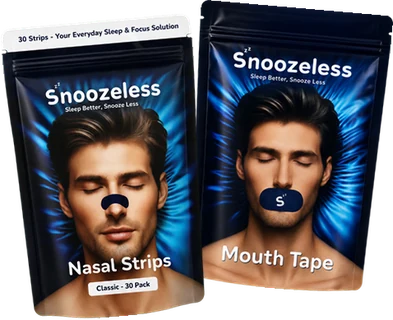
Mouth tape can help reduce snoring by encouraging you to breathe through your nose instead of your mouth. Nasal breathing supports better oxygen uptake and a calmer, steadier breathing pattern at night.
But it's important to be clear: mouth tape is not a treatment for sleep apnea, and it doesn't replace a diagnosis. If you have symptoms such as pauses in your breathing or extreme tiredness during the day, sleep apnea belongs in a doctor's hands, not in self-treatment. If you suspect you have sleep apnea, see your doctor first for a proper diagnosis and treatment. Only then, and together with your doctor, can mouth tape be considered as an extra measure.
How is sleep apnea treated?
The treatment for sleep apnea depends on how severe it is and can include several approaches:
-
Lifestyle changes:
- Losing weight: losing excess weight can help with mild sleep apnea.
- Quitting smoking: smoking makes sleep apnea worse.
- Sleeping on your side: sleeping on your side instead of your back can reduce snoring.
-
Mouth tape, only after talking to your doctor: mouth breathing can make sleep apnea symptoms worse. Mouth tape helps you breathe through your nose, which can reduce snoring. It doesn't treat sleep apnea itself, so if you suspect sleep apnea, see a doctor first and only use mouth tape alongside the treatment they recommend.
-
CPAP machine (continuous positive airway pressure): a CPAP machine keeps your airway open with air pressure. It's the most common treatment for moderate to severe sleep apnea.
-
Mandibular advancement device (MAD): this oral appliance moves your lower jaw slightly forward, which keeps your airway open while you sleep.
-
Surgery: in severe cases, surgery may be recommended to remove excess tissue or adjust the jaw to widen the airway.
When should you get medical help?
If you think you might have sleep apnea, especially if your partner notices that you often stop breathing while you sleep, it's important to see a doctor. Sleep apnea can be diagnosed with a sleep study, after which your doctor can recommend the right treatment.
In short
Sleep apnea is a serious sleep disorder that can have a big impact on your health and your daily life. The good news is that doctors can diagnose and treat it well, from lifestyle changes to specialized devices such as a CPAP machine. Better sleep can improve your overall health and your quality of life.
Want to learn more about sleep and health? Then visit Snoozeless!


